
Rumor has it, Tokaj wine, the king of wines, was discovered by accident.
One autumn in 1566, when Ottoman forces laid siege to Tokaj Castle and picking was impossible, the farmers returned to their vineyards three weeks later to find the grapes covered in a fungus. They made wine from them anyway, and lo-and-behold, the wine was good.
Another version of this story credits a chaplain, Laczkó Szepsi, who worked out how to harvest botrytized grapes, and gave the first true Aszú as an Easter gift to Prince Rákóczi’s wife, Zsuzsanna Lorántffy (a Hungarian princess) in 1631.
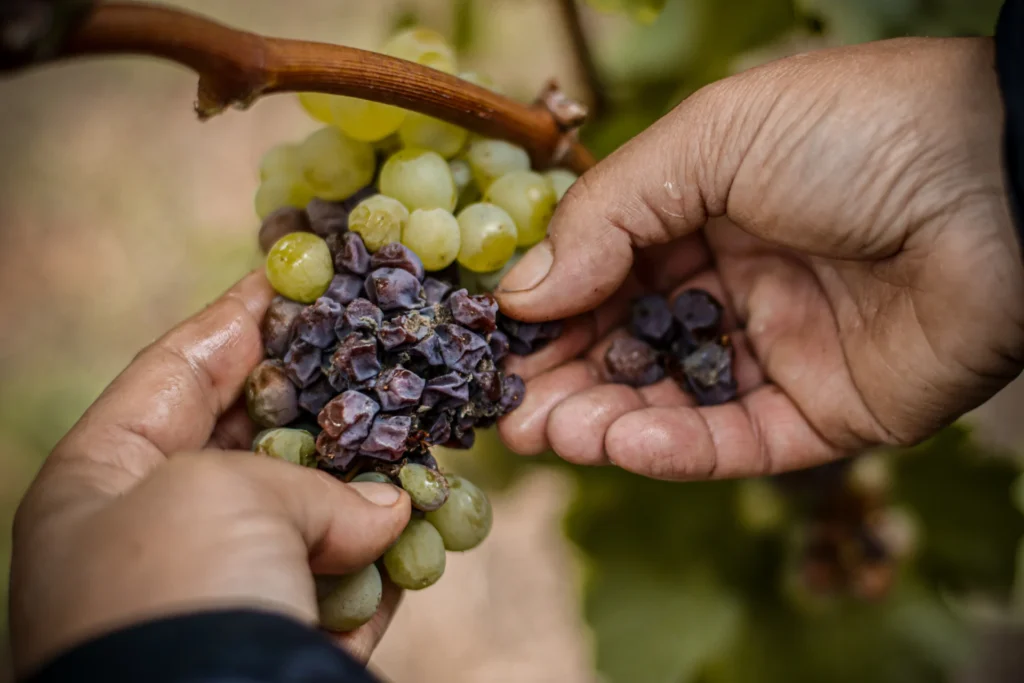
Either way, the fungus is the main character in Tokaj’s story: botrytis cinerea (noble rot). And four centuries later, it’s still the reason people take notice of this tiny wine region at the foothills of the Zemplén Mountains, where shriveled grapes are picked one by one.
Why does the Tokaj harvest take so long?
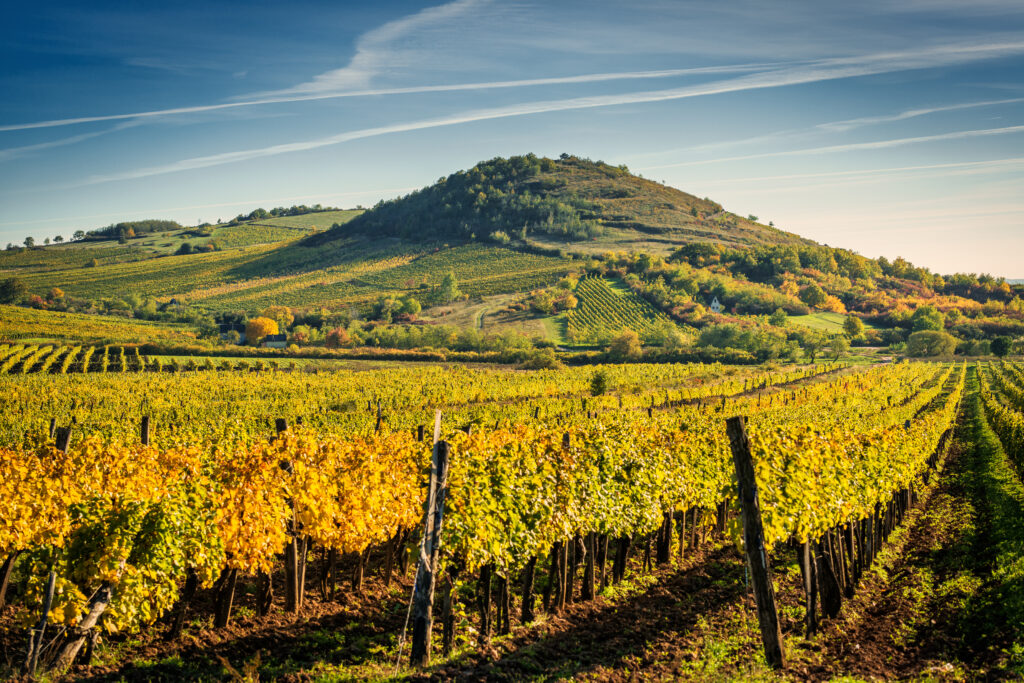
Each year, the Tokaj harvest runs from early September through to Aszú Day, December 10, symbolic close of the season. Tokaj sits where the Tisza and Bodrog rivers meet, and the temperature difference between the two results in a contrary climate in the autumn: fog most mornings, followed by sunny, breezy afternoons. This rhythm results in the perfect conditions for botrytis to develop. The fungus punctures microscopic holes through each grape’s skin, so the berry evaporates and shrivels into something closer to a raisin.
However of course, the fungus doesn’t hit a vineyard evenly all at once. It’s a more of an ad hoc attack. So pickers need to walk the same rows up and down, over day after day, picking only the berries that have shriveled since the last pass. A skilled picker gathers about 10 kilos of aszú a day, selecting fruit one berry at a time.
Tell me about Aszú
“Aszú” means “dried” or “shriveled” in Hungarian, and specifically it refers to the grapes that have been affected by noble rot: a grape that is brownish, wrinkled, and dehydrated. However over time, it has also become a shorthand for the wine itself.
Counting baskets: what does “puttonyos” mean?
As the pickers pass through the vineyard each day, they pick, one by one, the shriveled aszú berries, and put them into a puttony – a roughly 25-kilogram basket worn on their back. And how many puttonyos get added to one 136-liter gönci barrel of base wine decides how sweet, and how expensive, the bottle that ends up on your table will be.
And for most of the wine’s history, sweetness was measured this way: counting baskets. Three puttonyos into a barrel made a lighter Aszú, six made something closer to a nectarous liquid apricot. Any wine labeled Aszú today has to carry at least 120g per liter, roughly what used to pass for five puttonyos, and a bottle marked six puttonyos needs at least 150g.
One step past an even six puttonyos is ‘Eszencia’: wine made only from the free-run juice that drips from the aszú berries, before any pressing happens. Fermentation can take years and rarely pushes past 5% alcohol (usually more like 3-4%), because the sugar is too concentrated for yeast to work through it properly.
Where to stay in Tokaj
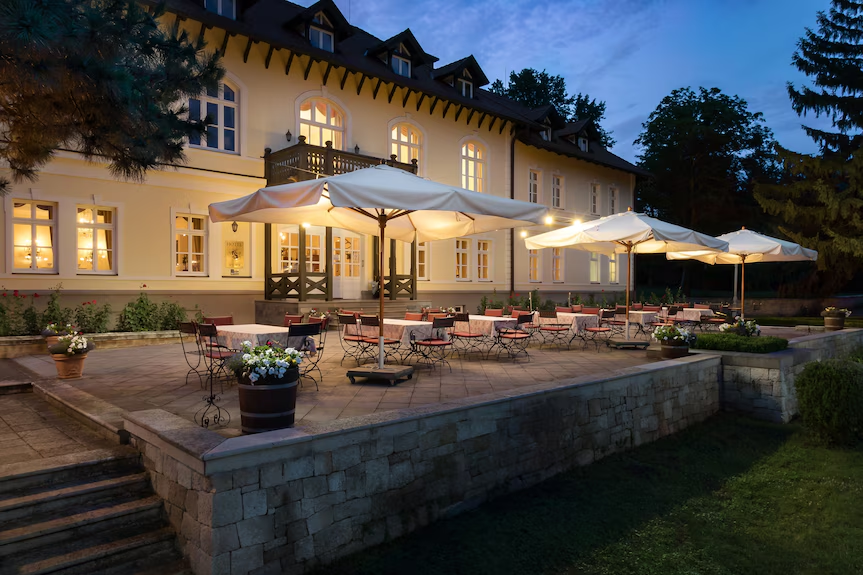
Gróf Degenfeld Castle Hotel and Andrássy Kúria & Spa both sit in Tarcal, in the middle of the wine country, close enough to two or three producers that a day trip doesn’t mean much driving (and then naturally, more wine) and both hotels are perfect to enjoy harvest season: small and quiet.
Which wineries are worth the drive?
Oremus, owned by Vega Sicilia, and Disznókő – whose amphitheater-shaped vineyard is one of the most photographed in Hungary – both take visitors through active harvest.

Why is Tokaji still called “the wine of kings”?
Tokaj’s vineyards were classified in 1730 – meaning it is generally recognized as the first in the world to fall under appellation control. More than a century before Bordeaux in 1855. The region was designated by royal decree in 1737 and named a UNESCO World Heritage site in 2002. And there’s plenty of anecdotal stories to back the title up as well; it is said that Louis XIV first spoke the phrase while handing a glass to Madame de Pompadour, although the history buffs among you may note that Madame de Pompadour was Louis XV’s mistress, not Louis XIV. So do with claim that what you will. In 1745, Tsarina Elizabeth demanded an emergency delivery ahead of her standing order of 375 barrels, unwilling to risk running short. Catherine the Great, took her love of the wine seriously enough to station a detachment of Cossack soldiers in the region, guarding the vineyards and escorting barrels all the way to St. Petersburg.
And a century later, Napoleon III kept the French Imperial court consistently supplied, ordering 30 to 40 barrels of Tokaji every year, while Sweden’s Gustav III reportedly drank nothing else. Franz Joseph, whose reign ran from 1848 to 1916, turned it into an annual gesture of goodwill, sending Queen Victoria a gift of Tokaji every birthday: a dozen bottles for every year of her age.
Like all good wine, every great bottle in the Tokaj cellars is born from patience. And for Tokaj, and luckily for us, the harvest doesn’t end until the vineyard says so. All good things come to those who wait.


