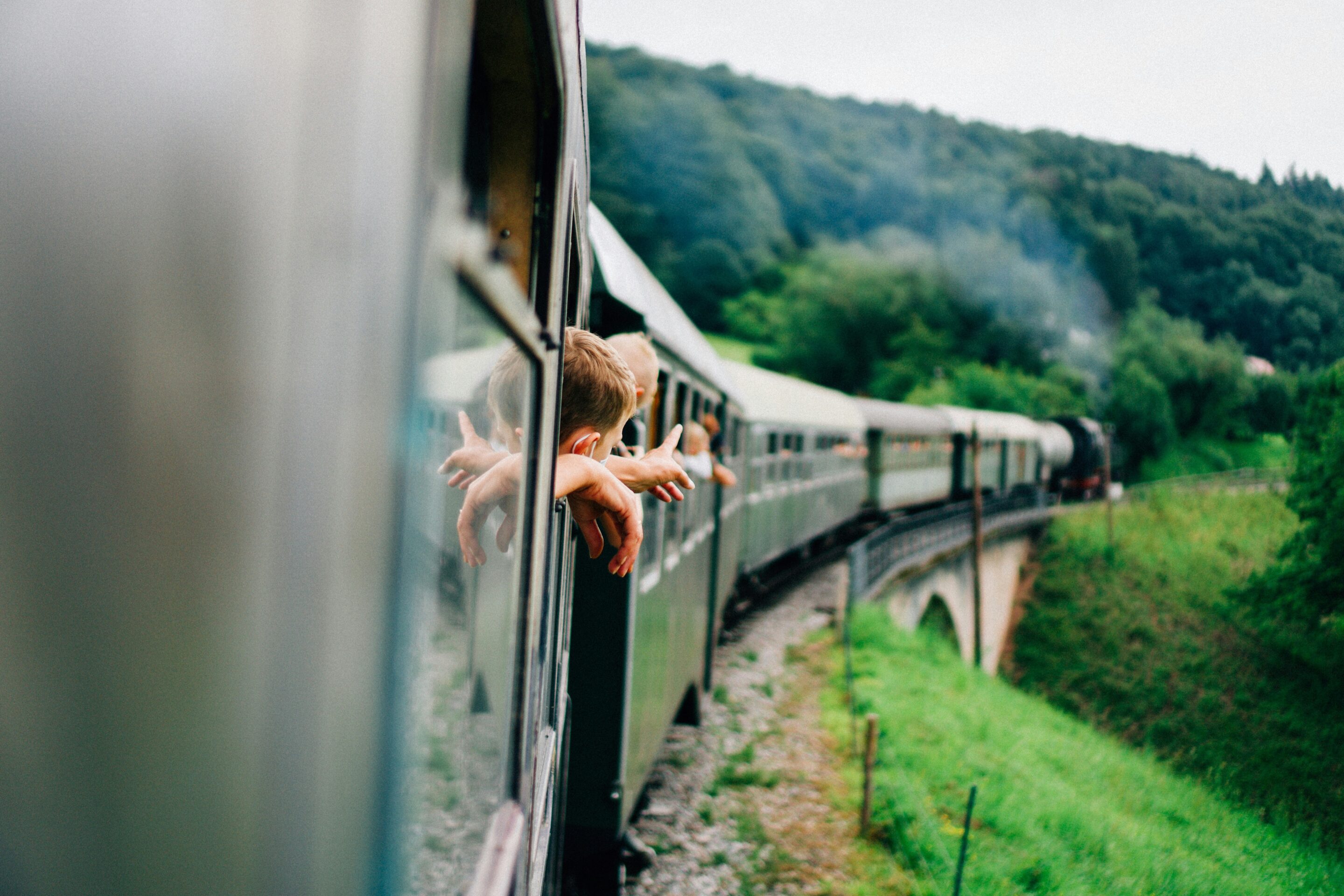
The hotel room is usually the destination. You book it for the view, the restaurant downstairs, the pool, the sense of having arrived somewhere worth travelling for. A new generation of luxury sleeper trains is reversing that logic. Here, the room moves, the restaurant rolls through the countryside, and the scenery outside your window changes while you sleep.
The appeal is partly romantic. Rail travel has always promised a more cinematic way of crossing a landscape, but today’s luxury trains are turning the experience into something closer to a travelling boutique hotel, complete with considered interiors, destination-led menus and excursions built around the places they pass through. Increasingly, the journey itself is the reason to go.
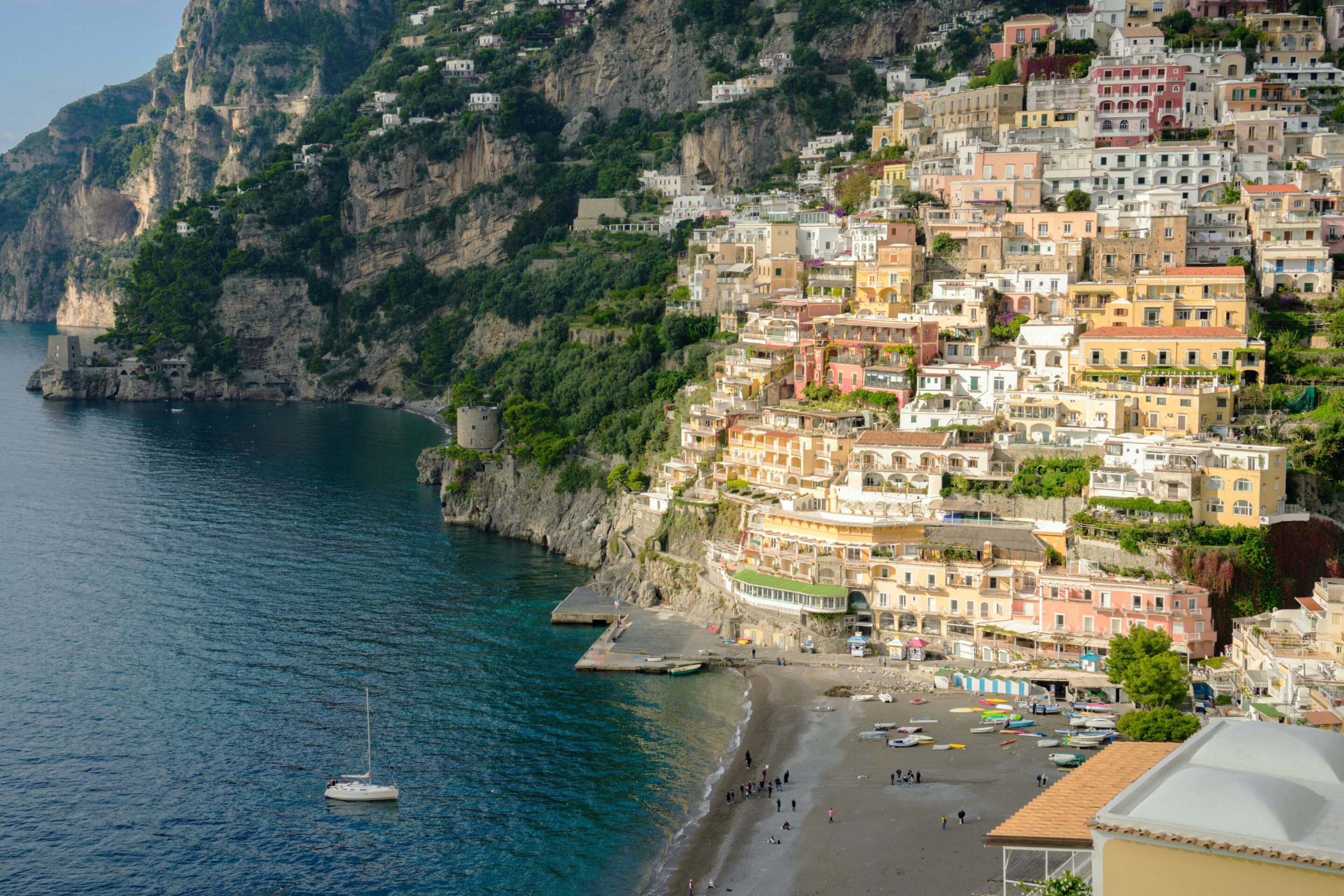
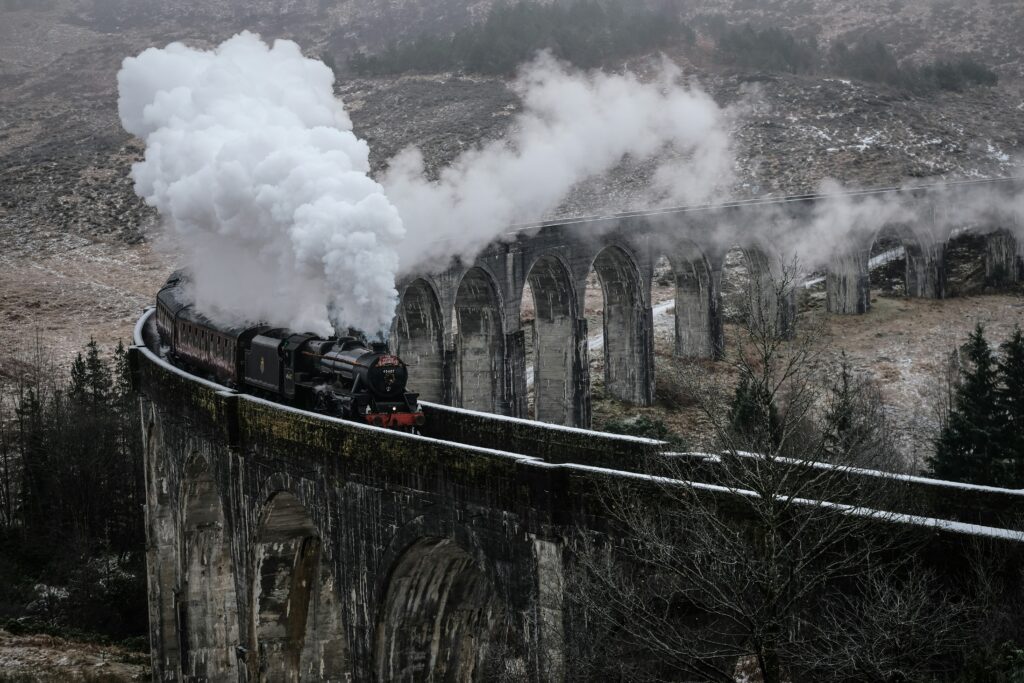
The latest expression of that idea is La Dolce Vita Orient Express, whose inaugural Rome-to-Istanbul departure left Roma Ostiense on October 22, 2026. Over five days and four nights, passengers travel from Italy through Central Europe and into Turkey, via Venice, Budapest, the Transylvanian city of Brașov and the Carpathian mountain resort of Sinaia. It is a contemporary take on the legendary Orient Express route, with a distinctly Italian sensibility.
The luxury sleeper trains to know in 2026
La Dolce Vita Orient Express, Italy to Istanbul
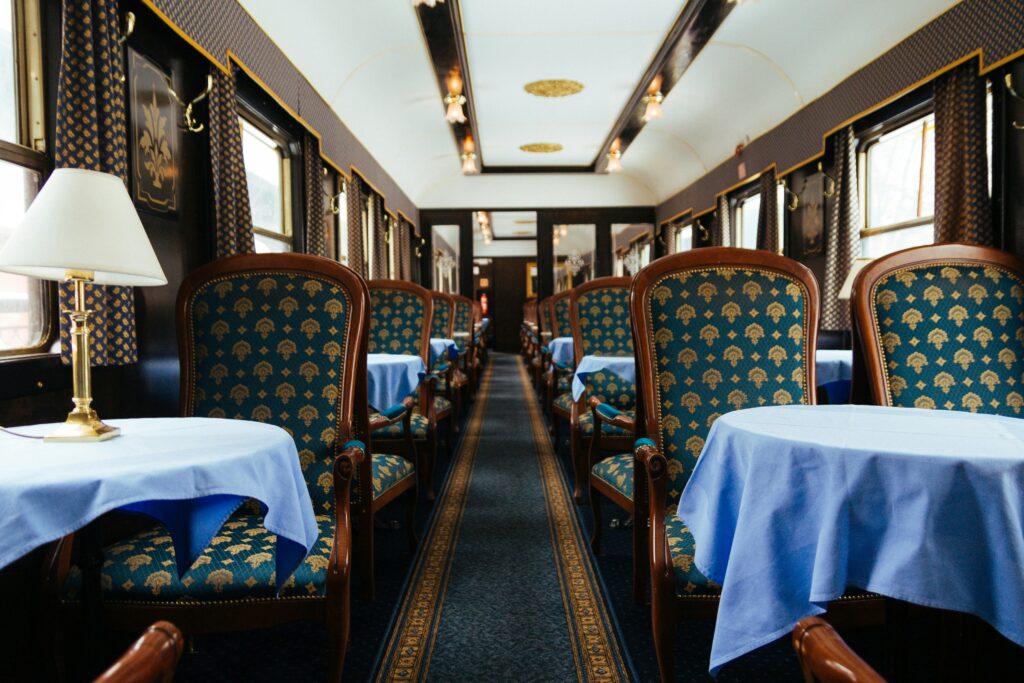
La Dolce Vita Orient Express is less a recreation of the original Orient Express than a tribute to Italian glamour. Launched on Italian routes in spring 2025, the train has interiors by Milan-based Dimorestudio that draw on the design language of 1960s and 1970s Italy: geometric patterns, rich textures and a mid-century aesthetic. It carries up to 62 passengers across 31 cabins – 12 Deluxe Cabins, 18 Suites and the La Dolce Vita Suite.
Food is central to the experience. Menus are overseen by Heinz Beck, the three-Michelin-starred chef of La Pergola in Rome, while a bar car, live music and leisurely dinners reinforce the sense that there is nowhere else you need to be. The journey even begins before boarding, in an Orient Express lounge at Roma Ostiense designed by Hugo Toro. Time ashore in Venice and Budapest gives way to the medieval streets and mountain scenery of Romania before the train reaches Istanbul – the historic eastern terminus of the original Orient Express – where the journey ends amid the city’s bazaars, domes and waterfront.
A reverse Istanbul-to-Rome journey follows a slightly different route through south-eastern Europe. The important distinction is that this is a special five-day international itinerary, rather than one of the train’s shorter journeys through Italy.
Britannic Explorer, Britain
Belmond’s Britannic Explorer, which launched in July 2025, brings the luxury sleeper closer to home. Departing from London, its three-night itineraries explore Cornwall, Wales and the Lake District, with excursions offering access to landscapes, cultural sites and experiences that might otherwise require a separate trip.
Interiors by London studio Albion Nord take their cues from the British countryside, while Simon Rogan – the chef behind three-Michelin-starred L’Enclume in Cumbria – oversees the food, championing seasonal ingredients and local producers. There is also a wellness suite, an observation car and a botanically inspired bar.
The result is a distinctly British interpretation of slow travel: less about crossing continents than seeing familiar landscapes differently. With three-night journeys priced from £6,300 per person, including excursions, meals and drinks, it is firmly positioned as a luxury holiday rather than an alternative way to get from A to B.
Seven Stars in Kyushu, Japan
In Japan, the Seven Stars in Kyushu has shown since 2013 that a journey can be as carefully choreographed as a stay at a leading hotel. With just seven cars – one for each of Kyushu’s prefectures – and ten suites for a maximum of 20 guests, plus an emphasis on regional craftsmanship, Japanese cuisine and encounters with local communities, it is one of the most distinctive luxury rail experiences in Asia.
Rather than offering a point-to-point service, Seven Stars operates curated journeys through Kyushu, Japan’s southwestern island, with itineraries that combine coastal scenery, mountains, hot-spring country and cultural stops. The experience is deliberately small-scale, and places are allocated by lottery when applications exceed capacity – which they usually do.
Its appeal lies in the detail: the changing scenery, the hospitality, the chance to discover a region through its food and traditions. It is luxury measured less by distance covered than by the richness of the experience.

Dream of the Desert, Saudi Arabia
The next frontier is the Arabian Peninsula. Dream of the Desert, Saudi Arabia’s forthcoming ultra-luxury train, is a partnership between Saudi Arabia Railways and Arsenale, the Italian group behind La Dolce Vita Orient Express. Its first journeys are planned to run some 1,300km from Riyadh, via Hail, to Al Qurayyat near the Jordanian border.
Designed by architect Aline Asmar d’Amman of Culture in Architecture, the train blends Italian craftsmanship with Saudi influences, from majlis-style seating to curated art in its corridors. Journeys will pair the country’s northern landscapes with cultural programming, desert excursions and destination-led dining.
The launch date is still moving: Arsenale has pointed to late 2026, though its chief executive has also said commercial service is expected in 2027. Either way, it will offer a new way to explore a country whose vast distances and dramatic scenery lend themselves to traveling slowly in comfort.
How much does the Orient Express cost?
The answer depends on which Orient Express you mean, which route you choose and how much privacy you want. La Dolce Vita Orient Express, under the Orient Express brand, is not the same as Belmond’s Venice Simplon-Orient-Express, which runs its own Paris-to-Istanbul journey once or twice a year. For La Dolce Vita’s Rome-to-Istanbul journey, fares start at €20,000 per person for the five-day, four-night itinerary, including the onboard experience and planned excursions.
Shorter journeys through Italy are priced differently, with fares varying by itinerary, season and accommodation; the five-day Grand Tour of Italy starts at around €15,000 per person. The broader point is that these are not conventional sleeper tickets: the price reflects the accommodation, dining, service and experiences bundled into a single journey.
For context, the Britannic Explorer starts at £6,300 per person for a three-night journey. Seven Stars in Kyushu has its own pricing and application process, while Dream of the Desert’s fares are yet to be widely published.
But sleeper travel need not mean spending the price of a small car. European Sleeper, the Dutch-Belgian cooperative that revived the Paris–Berlin night train in March 2026 after ÖBB’s Nightjet withdrew from the route, offers a useful counterpoint: a practical overnight connection via Brussels, three nights a week, with seats from €49 and berths in shared compartments from €79. It has no Michelin-starred chef and no suite designed by an internationally recognised studio, but it delivers the essential promise of sleeper travel: go to bed in one city and wake up in another.
The luxury of having nowhere to hurry
The contrast is revealing. At one end of the market, sleeper trains are becoming self-contained luxury hotels, where the itinerary, interiors and dining matter as much as the destination. At the other, overnight rail offers a more straightforward way to travel without losing a day to airports or sacrificing a night’s sleep to transit.
Both tap into a wider desire to make the journey count. A train moves at a pace that lets landscapes reveal themselves gradually; a meal becomes part of the passage through a place, rather than a pause between activities. Even the simple act of waking somewhere new feels different when the room itself has travelled overnight.
La Dolce Vita Orient Express is the most theatrical expression of this idea, carrying the glamour of Italian design across borders towards Istanbul. But the larger shift is not about nostalgia for a bygone age of travel. It is about making movement itself feel valuable again.
The most coveted room may still be the one with the best view. Increasingly, though, the view is changing by the hour – and the room is taking you somewhere.