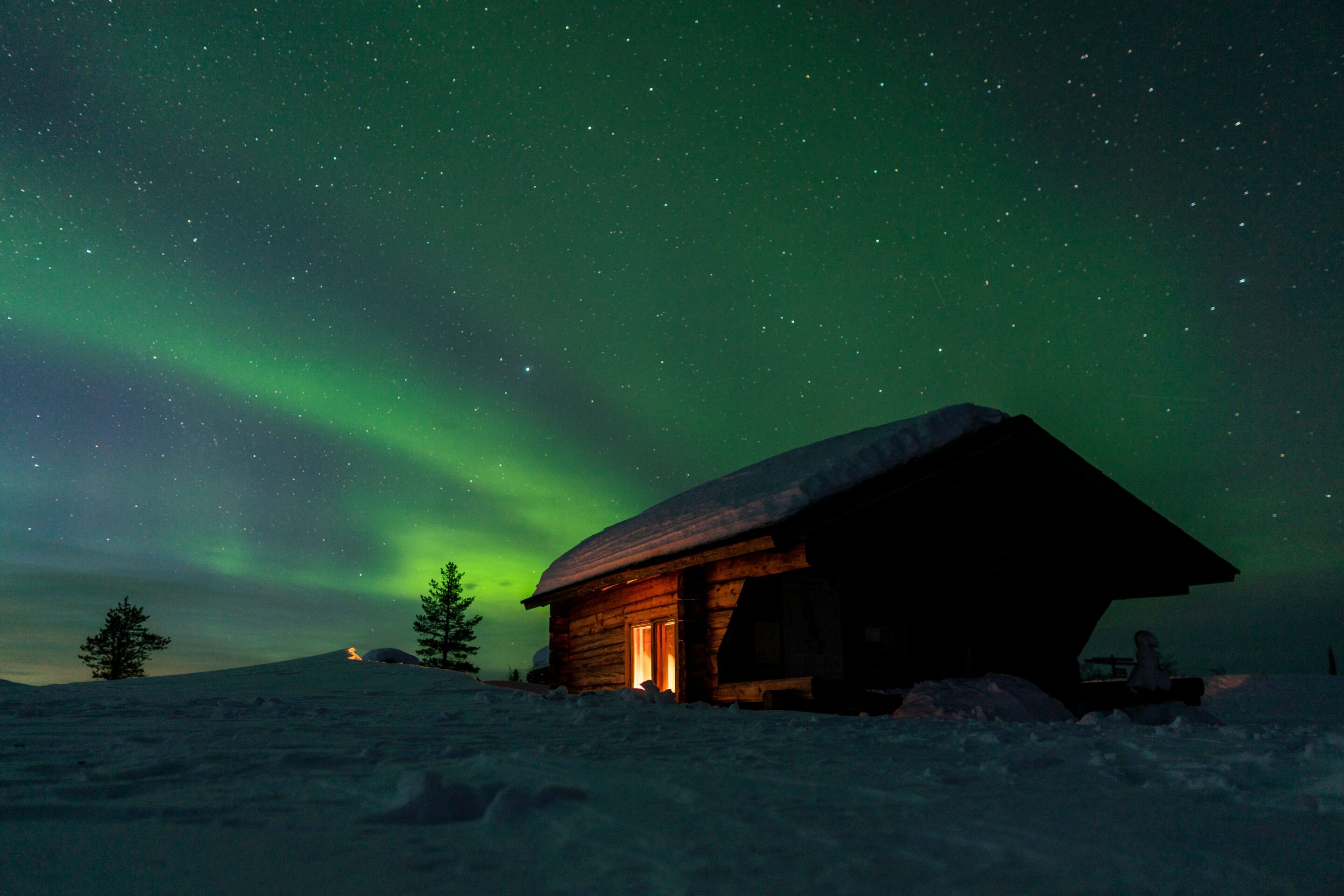
The northern lights keep terrible hours. They rarely appear before eleven, they never confirm in advance, and they have been known to turn up at two in the morning, stay for six minutes and leave without explanation.
The usual response is to stand in a car park in a borrowed snowsuit, refreshing a forecast app with big gloves that provide warmth but the inability to look at your map. However, since 2005, hotels in Iceland and Finnish Lapland have been doing the waiting for you – someone watches the sky overnight and rings round the rooms who requested a wake up call when it happens. Aurora hunting has turned from an endurance sport into, well, room service.
But with innovation eventually comes overload, and for anyone who would rather not share the moment with three coachloads from Tromsø or Rovaniemi, there are places further off the usual route where the sky is just as dark but the car parks considerably emptier.
Which hotels offer Northern Lights wake-up calls?
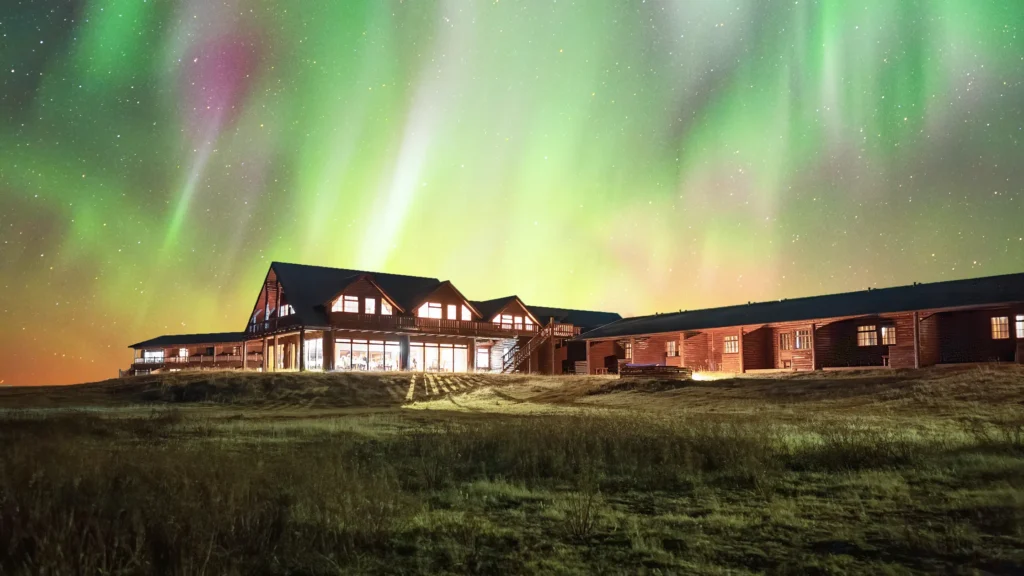
Hotel Rangá, South Iceland
The original, and still the most charming version of the idea. Every room phone has a button: press it, and the hotel calls whenever the northern lights appear, whatever the hour. Rangá sits in open countryside, well away from light pollution, with geothermally heated hot tubs outside for anyone who would rather watch from the water.
It also has its own observatory, with a 14-inch Celestron telescope and a TEC refractor, where a local astronomer guides guests from September to April. If the aurora doesn’t cooperate, Saturn usually will.
ION Adventure Hotel, Nesjavellir
Less than an hour from Reykjavík, on the slopes of Hengill, an active volcano, above Lake Thingvellir. The building began as a workers’ inn for the neighboring geothermal power plant, sat empty until 2011, and was rebuilt on a row of pillars that lift it off the lava field.
Staff keep watch and will call the room on request. In the meantime, the Northern Lights Bar juts out from the building with 180-degree windows, which, in our opinion, is a reasonable place to wait for the phone to ring.
Wilderness Hotel Muotka, Finnish Lapland
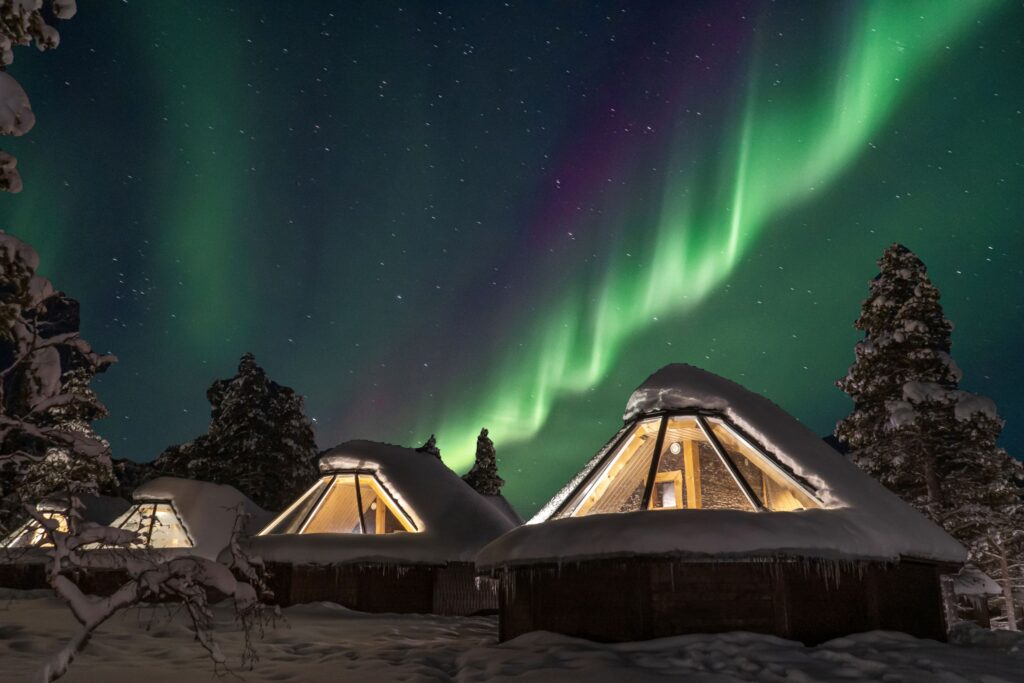
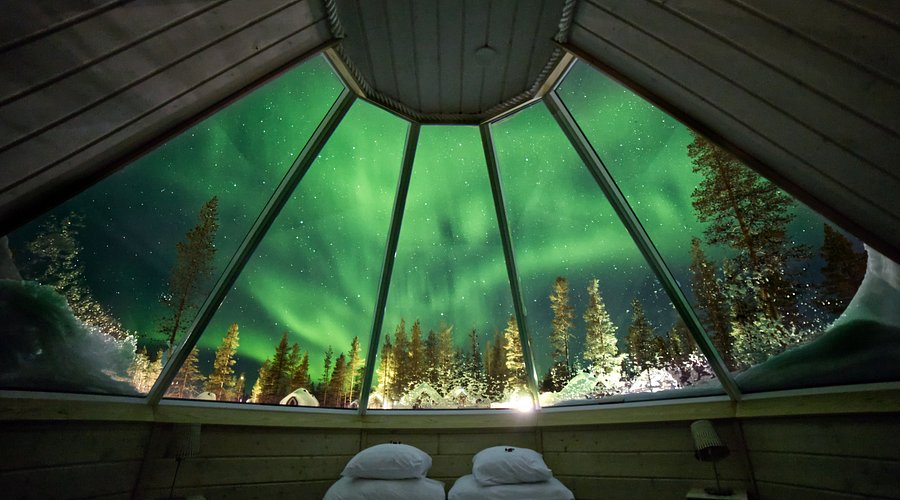
Half an hour or so from Ivalo airport, on the edge of Urho Kekkonen National Park, with trails leading straight from the property into the forest. Its Aurora Cabins have laser-heated glass roofs that stay clear of frost however cold the night gets, so the sky is visible from the pillow – you don’t even have to get out of bed when the phone rings.
Northern Lights Village Saariselkä
Some 250 kilometers north of the Arctic Circle and a short walk from Saariselkä itself. The cabins have half-glass roofs, also laser-heated, and all face the northern sky. Alerts arrive on a tablet in the cabin, and guests can set them to stop at a particular time. An Arctic Do Not Disturb.
Where are the most unusual places to see the Northern Lights?
The Faroe Islands and Svalbard both sit outside the usual Iceland, Lapland and Tromsø circuit, and both reward the detour for different reasons: one for its emptiness, the other for its darkness.
The Faroe Islands
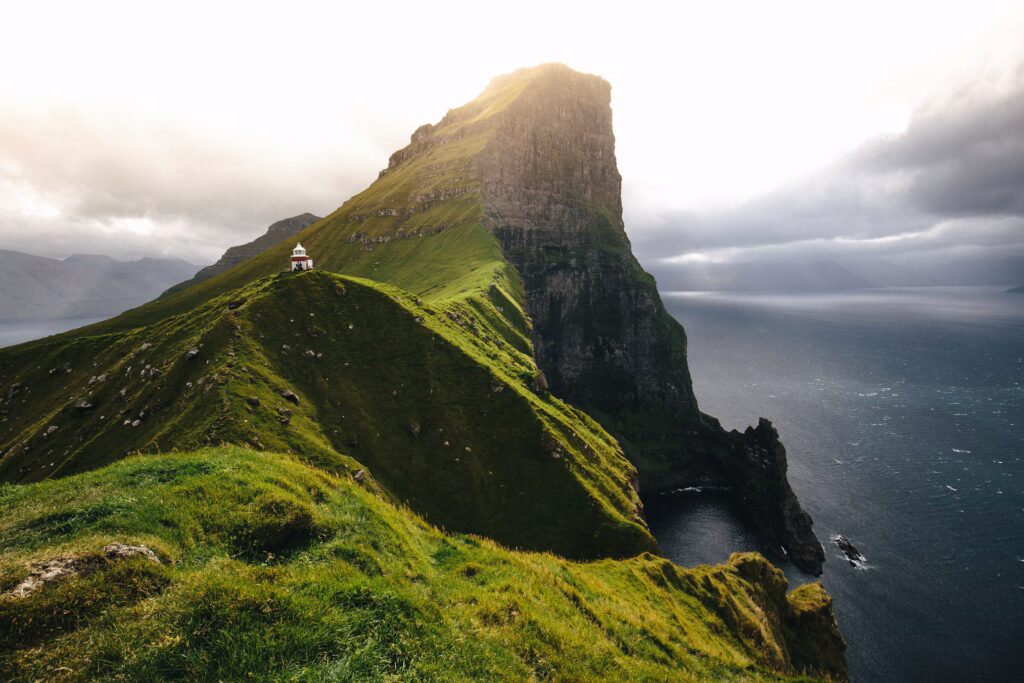
Eighteen islands at 62°N, between Iceland, Norway and Shetland, with a population smaller than most London boroughs and very little artificial light to compete with the sky. The aurora season runs from November to February, sometimes into March.
The tourist board’s own recommendations are Viðareiði, on Viðoy, one of the northernmost islands; Suðuroy, the southernmost; and Gjógv, a village on Eysturoy built around a sea gorge, which is what its name means. Stay in Gjógv itself at the Gjáargarður guesthouse, or at Hotel Føroyar, on the hill above Tórshavn. The Faroese weather changes its mind several times an hour, which works in both directions.
Svalbard
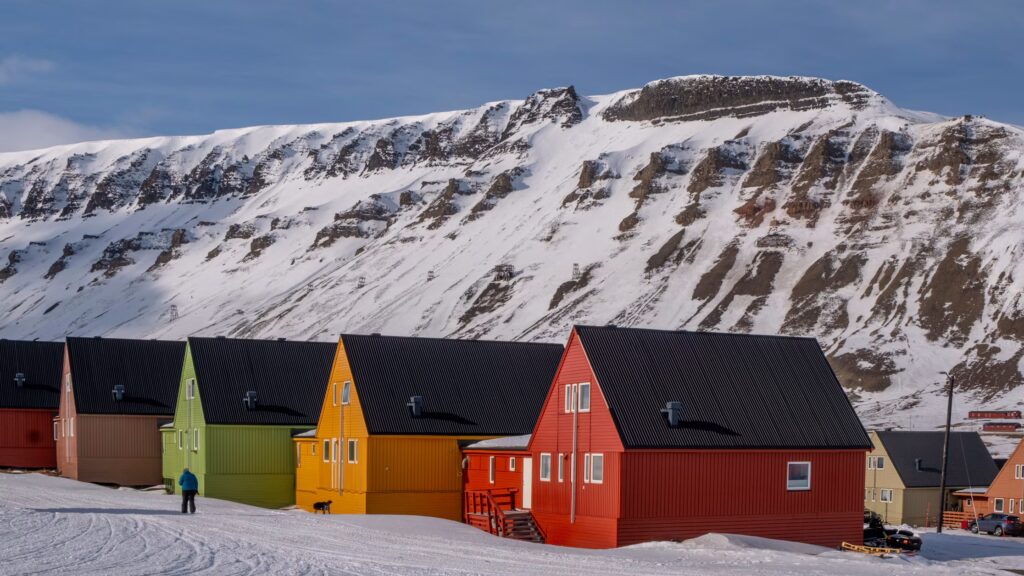
At 78°N, Longyearbyen is the northernmost town most travelers will ever reach, and from late October to mid-February the sun doesn’t rise over Isfjorden at all. Between November 11 and January 30, even the twilight disappears. The practical effect is that the aurora isn’t confined to the small hours. In the polar night it can appear in the middle of the day, which makes Svalbard one of very few places where the northern lights can be seen before lunch.
Can you see the Northern Lights in Scotland?
Yes, and most reliably in Shetland, which sits closer to the North Pole than any other part of Britain. Displays are most likely between mid-October and mid-March, and locals have their own name for them: the Mirrie Dancers.
Lerwick lies at around 60°N, level with Bergen and St Petersburg and nearer to Norway than to Edinburgh. The same latitude that brings the aurora in winter produces da simmer dim in June, when the sun dips so briefly that it never really gets dark. Shetland, in other words, spends half the year with too much light and the other half putting on a show in the absence of it.
The advice from Shetland’s tourist board is to get away from Lerwick’s street lights and avoid the full moon.
On mainland Scotland, the aurora shows up on stronger nights along the north coast and in the Highlands, and occasionally much further south: the May 2024 storm reached as far as Mexico.
Will the Northern Lights be good in winter 2026–27?
Very likely, yes. NASA and NOAA announced on October 15, 2024 that the sun had reached the maximum of its 11-year cycle, and it has since entered the declining phase, with fewer sunspots and flares than at the peak.
But fewer is not the same as quieter. Some of the strongest geomagnetic storms on record have arrived after the maximum: the Halloween storms of 2003 came two years into the previous cycle’s decline. This cycle has kept to form, with a severe G4 storm on November 11, 2025. Solar physicists expect strong displays to continue through 2026 and into 2027.
The aurora, in short, still keeps its own hours. But it’s become much easier to outsource the waiting.